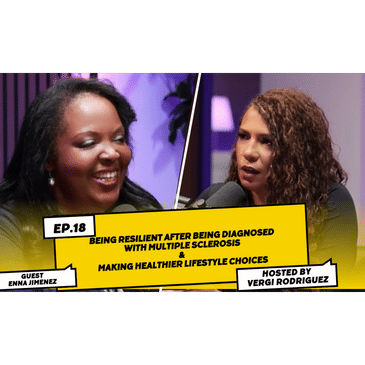
It's MS Awareness Week: March and we were able to sit down and chat with Enna Jimenez who is a published author , thought leader and speaker. Award-Winning Change Champion who has over 30 years in multiple industries with expertise in Leadership, Technology, and Transformation Management. Enna was open and vulnerable with us this week and talked about what it was like to be diagnosed with Multiple Sclerosis. The impact & adjustments that had on her family & friends.
If you would like to learn more about MS or donate please go to : https://www.nationalmssociety.org/
Enna Jimenez https://www.ennajimenez.com/
IG : https://www.instagram.com/ennajimenez/
A Race of your Own Series IG : https://www.instagram.com/raceofyourown/
Thank you for tuning in. Don't forget to subscribe.
Listen also on: Spotify: https://open.spotify.com/show/3YOHILgy0h1UYSmd72Knaz
Amazon Music : https://music.amazon.com/podcasts/0d49ec85-b465-4703-8bfa-9fd79b958b32/a-race-of-your-own
RSS Feed: https://dashboard.rss.com/podcasts/araceofyourown/
[00:00:00] Hi, I'm Vergi Rodriguez and this is A Race Of Your Own where we talk about inspiration that leads to resilience. And today's guest, we've had her on the show before. She's a published author, a speaker, and a Latina influential leader. She was named Amplify's Latin inaugural ALX 100 Award, involved heroes as an executive role model in 2023 and in 2022.
[00:00:27] And U.S. Today featured her as Alpha's Woman of Alpha 2022. And for those of you that don't know, Alpha is the Association of Latino Professionals for America. And welcome again to the show, Enna Jimenez. Well, thank you so much. It's such a pleasure to be here again. Yeah! Thanks for being here. So, you know, previously we've had you on the show and we talked about, you know, your background, where you're from.
[00:00:52] For those guests that and people, viewers that haven't watched the show before, didn't watch the episode before. Tell us a little bit about yourself. Sure. Absolutely. So, Enna Jimenez, born in Puerto Rico. My parents are from Dominican Republic. So, I'm proud to be both Puerto Rican and Dominican. I've been living in Boston for over 40 years. And, you know, it's just been a great upbringing with my family. They really focused on just community and organizing.
[00:01:19] And so, I've had a fabulous time with my brothers and sisters. I am a mother of four. I have five grandkids. Five? Grandkids? My oldest stepson has five kids. So, yeah. Wow. But, you know, we all live in Boston and we're a very close-knit family. Nice. Shout out to Boston. Boston. Yeah. I'm a Yankee fan, though. I can't help it. I know. I know. I know. I know.
[00:01:49] But that's okay. Okay. Okay. It's cool. We're not going to go there. We'll go to a game one day. But today, you know, and I know we've previously talked about a lot of your accomplishments and you moving in the space of corporate America and in tech and what that was like and creating these transformational management spaces, which I love that term because you kind of coined that term for me. You know, but today we're going to talk a little different. We're going to go kind of get a little personal here.
[00:02:17] You know, you shared with me, you know, about your journey, about being diagnosed with MS and what that was like for you and how that has led to you really, you know, looking at the way you take care of yourself, self-love, self-care. You know, and I'd really like to delve into that today and discuss that, especially for us Latinos, where food is such a big part of our culture, you know, and, you know, I was sharing with you. I'm like, I remember as a kid, I've been eating fried cheese since I was like four years old, you know, so. Queso frito.
[00:02:47] Queso frito. We need that queso frito in there for sure. You know, with the tostones, you know, salami, todo. So talk to us about that, you know, and, you know, delve in there. Where, when and how did you kind of realize what were the signs you started to get for yourself first that you started to maybe think that there was something going on? Yeah. So I think before I touch into that, you should know who I was before that. Yeah.
[00:03:14] And so, you know, Anna Jimenez is a social butterfly. I mean, people like, look, I could party. I mean, party, you know, we're Latinos. Dominican, man. You know how to party, right? Of course we do. I'm the first one at the party. I'm the last one to leave, right? And so I've lived a life of always being super outgoing. I'm the party girl. I'm the life of the party, right?
[00:03:41] And so, you know, last year, towards the beginning of the year, I started to just, I was sort of feeling just numbness and tingleness in my hands and my legs. And, you know, we were coming out of the pandemic. I'm thinking nothing of it. I'm like, okay, this is my body saying that I need to get up from this chair, from the couch, from the bed. Like, you need to get some moving. You need to get some workout.
[00:04:06] You know, start doing something in your life that's not just being sedentary for 24 hours a day. So, of course, and typical Latinos, right? We ignore. We ignore stuff, right? We're like, Vicks, right, Vicks. And you're good to go. Vicks fixes everything. Everything. Right? Shout out to Vicks. Yes, yes. So, you know, for months, I just completely ignored that this was happening, right?
[00:04:35] And so, but it got to a point where, honestly, three parts of my body started to be pretty numb. And then, you know, at some point I mentioned it to my mom and she's like, what? And how long has this been happening for? And, you know, our typical moms, like, did you call your doctor? I was like, of course not, mom. She's like, call the doctor right now. Call your doctor. And she, of course, I did not. I did not. And for like a week, every day, multiple times a day, did you call your doctor? Did you call the doctor? Did you call the, that's what I got from my mom.
[00:05:05] So she, did you feel like maybe, I mean, she's your mom. Moms know. Right, they know. Moms are like, hmm, something, like maybe she saw you kind of move a little different or do something a little different. Yeah, who knows? I mean, I haven't had that conversation with her, so I'm not sure. Right. But, you know, I ended up, what got me to finally call the doctor, I won't forget this, I was actually out here in LA, in Anaheim. I was working, you know, with my company.
[00:05:31] And it was like, I knew that, I knew the parts of my body that had been feeling the tingleness, but it went to like my upper arm and it had, I had never had that feeling there before. And something said to me, this is now, this is really not well. Like, like it resonated in my head. Something can't be right. Something was off for you. Something was off for me.
[00:05:57] And so Friday afternoon, I called my doctor's office at Mongemon, California, right? Just coming home for the weekend. And I called the doctor's office and said, I need to go see somebody Monday, Monday. And so I came in, saw the nurse, they were like, we don't know what's wrong, but let's get you some tests. You know, I won't belabor a story, but, you know, it literally took about four days for them to tell me that I had multiple sclerosis. Now, you have to understand.
[00:06:27] I was in the emergency room. I was told by the emergency doctor that you have multiple sclerosis. At that moment, I was like, what is that? Because literally, in my head. It just didn't resonate. It didn't resonate. I'm like, what is multiple sclerosis? You're like, it's curable, right? Yeah. Right, right. Like, it's like. Like, what do I need to take? I need surgery. I need pills. Yeah. Let's let's. And they're like, no, no, no. Wow. You're not understanding this.
[00:06:56] This is an incurable illness. This is an illness for life. This is like, like, yeah, you have it. So, of course, what do we do? Pulled out my phone, started Googling. I was like, okay, what's multiple sclerosis? Oh, my God. What are the sclerosis? Google doctor is always the way to go because you're like, there's got to be a solution. Right. Yeah. Yeah.
[00:07:22] Of course, Google does what Google does, which is it gives you the worst case scenarios. Right. That's the first thing that came up. You're bedridden. You can't. It's like you have motor. I'm like, oh, my God. Yeah. So needless to say that the first six months of this, you know, after finding out about this, I, I don't know who was driving my body, but it was not me. You know what I mean? It was a thousand percent not me.
[00:07:50] There was someone else, something, someone else to control. I mean, it was the other side of Anna that took control the auto, the auto control of Anna to control. But for a good five, six months, I, I just go to sleep, wake up in the morning, do what I needed to do, go to sleep, wake up in the morning, do what I needed to do. Something shifted you into autopilot. Completely. Completely. And I, it's like, I didn't know. In the midst of all this, they also told me that I was, that I may have some cancerous cells.
[00:08:18] And so again, I was like, okay, you get the MS and you got cancer. Right. And so luckily they went through surgery, pulled every, took everything out. Those were benign. Congratulations. So thank you. So luckily I did not have cancer. So that's the beautiful part. It's beautiful. But you know, it's still a process, right? It's a, it's an emotional process. And they tell you that there's like seven steps to like grief, right? I went through all of them back and forth a thousand different times. I still go through them all the time. Right.
[00:08:46] So it's like, when I first met my, first met my neurologist, she was like, yeah, you're in denial and you need to get out of denial. So like, this is happening. You need, you need to adjust to the fact that you have to have this illness and you need to deal with it and you need to make decisions. And I'm like, okay, what are the best decisions? You tell me, you're the doctor. She's like, no, no, no, no. Here's the suggestions. You need to go research. You need to think about what do you think is best for you?
[00:09:15] I'm like, I don't have time for this. Tell me what it is. Tell me which one I should do. Right. Right. What, what, what, what do you need from the medical plan? Like, let's just. Let's get with it. Let's go. Like, let's go. Right. Right. But again, autopilot Anna. Right. I'm an autopilot. I am not thinking. I am not. Nothing is thinking in. And so it was hard for me. It was hard for my kids. It was hard for my family. Everybody is like, okay, let's come in. Let's help.
[00:09:44] Let's, let's do all these things. And you're like, I'm fine. I'm fine. Wow. I'm good. I need nothing. And they're like every single day. All throughout the day. Everyone is calling me. My friends would meet up with me. They're crying. And I'm like, I don't know why you're crying. Because I'm not crying. I'm not crying. Wow. So why are you crying? If I'm not crying, why are you crying? And you didn't even realize that was, it was like your neurologist said, it was denial. Correct. Correct. And so I definitely went through that denial period. I went through the anger.
[00:10:14] Why me? Why is this happening to me? Like, what have I done in my life to deserve to have this happening to me now? It's like, and then I'm like, but I'm, I'm feeling good. Okay, fine. I had a little numbness. Fine. Give me some steroids so it'll go away. Right. Which they did. They gave me, you know, some initial treatment. And so the, the numbness and the tingleness went away. But again, I'm in this, I'm good. This is not about to take me down. Right. So I'm still trying to do all my things. It's that fighter.
[00:10:43] Because we've talked about before, you know, resilience and kind of cutting through that. It's like, it's like, it's like you just, whatever adversity, adversity, excuse me, gets thrown your way. You, you're just like, okay, obstacle. I have to either go around it, jump over it, go under it. Like, I got to move it up, chop it up, move it out the way. Like, but this is a different thing. This was different.
[00:11:09] Because I, this, for the first time, I couldn't control this. I had zero control. And I had zero control because the illness, I had the illness. And they're like, yep, you have this. And I was like, are you sure? Like, yes. Right. Let us show you everything. Right. And they did, they showed me all the MRIs. They showed me everything. Like, this is where all the lesions are and everything. And I'm like, okay, but maybe something else. They're like, no, this is what you have. Now we're going to treat you. Let's handle that.
[00:11:38] But again, I'm in this space of, this is not happening. It's not happening. I am not thinking about it. I'm going to try to go through my day to day. But because I knew that something, I mean, you know, you know yourself, right? I got to a point where it was no longer me sort of making decisions, no longer me sort of thinking through things. And then I crashed. And that crash, what was that like? What do you mean crash?
[00:12:08] What was that? I broke down. I literally spent a good four to five days just crying. Just crying. Uncontrollably crying. Like, I could be sitting here and tears would, and I'd be like, oh my God, I don't know where the tears are coming from. Like, I don't know where the tears are coming from. You know what I mean? And they would just come out. And so that's what I mean when I say I crashed. I crashed.
[00:12:41] Yeah. It's like, okay, wipe your tears away. Let's go. Let's go. Let's keep doing this because I'm not about to let something like that keep me down, hold me back. You know? And it took all of me to get to that point where I can get through those seven stages, right, of grief. Yeah. To get to a place where I'm finally in acceptance, where I'm finally at a place where, okay, this is my new normal.
[00:13:09] How am I going to handle this? What am I going to change? What are the things that I need to do? And that's why I started learning about this healthy journey. Like, I needed to work out. I needed to change my healthy habits, what I was eating, you know, my diet. And so I had to come into this whole new world. Again, and us, new normal. And I'm still, you know, still navigating that world, that new normal. Because, again, I'm the party person. Yeah.
[00:13:39] You know, I'm the outgoing person. That's our culture, too, right? Yes. Like I said, like you're talking about health. And I think acceptance was the big one. Because once that sets in, you start to take responsibility. You start to take accountability for, well, if this is my new normal, then maybe there are some things I need to change, right, to just make it more manageable, right? And food for us is a huge thing.
[00:14:06] Because I was telling you the story earlier. Like, I, you know, at seven years old, my mom would be like, what do you want to eat? And I'd be like, pork chops and plantains. Like, the greasiest thing you can give me. And she'd be like, okay. You know, and then later in life, you know, I go to my family in DR. And I'm like, I'm just, you know, I'm eating vegetarian. And you got a big plate of food. They'd be like, veggie what? They do not understand what vegetarian is. Vegan or vegetarian or just whatever. And they're like, no.
[00:14:36] So, you know, and I love food. I just, we love food, right? So having a change for that, what was like kind of the first step? I know you said you were like working out and stuff. But what was kind of like the first step where you were like, is there like a food that you gave up? You're like, oh, I have to give this up. I have to. You know, I think the biggest thing that I gave up was steak. And I love steak. Yeah. Love. Love. Steak. Right. But it didn't sit well. Right.
[00:15:05] It would make me too tired. And so one of the side effects of MS is being fatigued. Right. And so the days that I had it, it would make me extra tired. And so, again, you start to learn. There's certain foods that you consume that just makes your body feel differently. And so, you know, I throughout starting to work out and trying to find different, you know, healthy ways, I actually found Orbalife. Which, believe it or not, worked for me. I do.
[00:15:31] I started to do their protein shakes and their teas, which gives me energy because, again, my biggest thing was the fatigue. You know. And so I introduced that into my diet. And now, honestly, I only eat chicken and fish. You know, I kind of stick to those every now and then. Like I have, you know, my daughter's birthday party, her big 25th. We have Benin. Of course. Christmas. Benin. That's what I'm saying. I have a little bit of it. You know what I'm saying?
[00:16:02] But I don't. I really just stay clear from it. Right. When I go out with friends, there was one time where I had meatballs. And I was like, why? Because you're like, I'm like, oh, my God, everyone's having all these meatballs. It looks amazing. It looks so delicious. And then I'm like, yeah, note to self. Yes, I knew that I should not have had that. Right. And then you do it and you're like, yeah, that was not a smart move. So I kind of so, again, try to be healthy. Right. To losing weight, exercising. Exercising is not so big.
[00:16:30] And my friends, people that know me know that I hate exercising. Like, look, I drive everywhere. I drive everywhere from here to here. I could be going two blocks. I could be going one block. I'm still going to get in my car and drive to that block. And they're like, Anna, it takes you longer to do that. I'm like, it doesn't matter. Some people love gym culture and other people just don't. For me, I'm like, I'd rather take a hike any day. Really? I'd rather do a hike any day than have to go to a gym because I didn't.
[00:17:00] You know, my background is I was a dancer. I was in the dance studio. That was used for the big fame movie. Is that? Yeah. LaGuardia. Yeah. Yeah. LaGuardia. That was it. So fame school. So we were spoiled in that sense where we, you know, we had dance studios and we had access to that. So I'd get that, you know. And then after school, I'd go get a slice of pizza and a Snapple. I'd get a slice of pizza and a Snapple. Nice. What was important to me, too, to touch upon through this was, you know, your levels of
[00:17:30] grief kind of in that sense and then accepting. Right. Right. But, you know, underneath all that to me is like important self-care. Yes. Which leads to self-love. Right. And really kind of that journey of like mentally and emotionally taking care of that part of your health. Right. And that was so important. Right. Because now I needed to be able to say, OK, I'm going to wake up and I'm going to work out. I'm going to wake up and I'm going to do my shake before I get on that call.
[00:17:59] Because I came my culture or my mindset before was like work 24 seven or board meetings, you know, whatever I needed to do. Right. Go do all these activities. And that I would always prioritize that all that stuff first. And I had to change. I had to recognize that I needed to wake up in the morning because I like working out better early in the morning. And I had to get that workout in. If I didn't do that, it was just that means that that day I probably wasn't going to work up. And that's not good. Right. Right.
[00:18:27] Making sure that I had those 15 minutes, you know, to make my shake, to make my tea, to do all the things that I needed to do to set myself up so that as I sat down to have that day long, you know, meetings that I had all the right snacks in place already there so that I could be eating healthy throughout the day. So that it took some adjustment to figure that out. The other big adjustment was going to bed early. Mm hmm.
[00:18:53] Like being at an event and being like eight o'clock, eight thirty. And my body is saying, girl, it is time for you to call it a night when I'm usually the person that's out till two, three o'clock in the morning and having to be like eight, nine o'clock. OK, I got to go. People are like, we're just wrapping up here to go to the next place. And I'm like, sorry, I can't join you. That has taken so much for me to adjust.
[00:19:22] And then knowing that there were nights when I wanted to go out and wanted to party in those days, I would have to either build in a good 30 minute, you know, 15, 30 minute nap that I can take before I would go out. And of course, adding my little we call my little lift off that gets me. OK, let's do this. Let me do a really condensed one so I can get all this energy that is going to help me to stay out all night because otherwise I'd be yawning.
[00:19:51] It'd be 11 o'clock and people are like, Anna, how are you yawning? Like, yeah, I'm tired. We call those disco naps. I call I had to take a disco nap. You got to give me you got to give me 15, 30 minutes. I need a disco. Girl, I did not do that before. And so, again, part of Anna's new normal is having to adjust and having to find time to let me go to my room. Let me go somewhere, find some quiet time. Now, I need quiet time. I need time just for me to be able to think some peace time before I can continue to do all this stuff.
[00:20:21] So it's it's been hard. It's been hard. And, you know, for me, when I found myself in moments where I started to put myself first, it it really starts to change your outside world in the sense of where you start to get a reflection back of of what that love looks like. Right. Because to me, I say it all the time. Self-love is key.
[00:20:49] And I and I really believe like, you know, going and having a doctor tell you that you have MS that now and you're like totally in denial. You're like me. Like I party all the time. Exactly. Fine. Yes. You know, and then you you have to start to really accept and adjust what that looks like. Right. It makes you slow down. It makes you reflect. It makes you go, OK, maybe I need to make some changes in my life.
[00:21:18] And and I always go back to self-love is key because it for my own journey, when I realized that for myself, what what that really meant and what that really looked like, I was able to to act in that way towards myself. And I was always outside looking for outside validation and I didn't really need to get it from the outside. I just I just needed to do it for myself. Yeah. Right. And so once I did that, you know, things start to shift on the outside.
[00:21:48] Right. Which which makes your life easier. Now, I'm sure your friends are like, oh, no, Anna needs to get to bed by nine or ten. So then even the people around you start to support that. Oh, for sure. For sure. And you're so right with the whole self-love. How my friends and family showed up. Oh, it's amazing. Right. Because, yeah, my friends are like, OK, let's we're going to do brunch with Anna. Right. Because they know and they know that they go too late. Exactly. It's too late for me. Right.
[00:22:15] And so they know that they're not going to be if they know that I have a lot of stuff or a lot of activities or I'm traveling for work. They're like, OK, and that's going to need at least one week of downtime before we're going to be able to invite her out. So they know. Right. Yeah. Because because if I just came back from a work trip, I'm not leaving my house like I need downtime. Right. Right. And so they know these things and now they they they adjust. And it's it's so beautiful. But I think the other thing which was important was I'm I'm a giver.
[00:22:45] I've always been a giver. I am always about putting everybody else first and me last. And that's really the way I've just led my my life. And having to make that shift to now put me first. That was hard. And it was hard because, as you said, that whole self-love. Right. And I was like, OK, but if I if I made all this space and time for everybody else, can I carve out a little bit of time for me? Can I go to that massage?
[00:23:13] Can I go and just go do my nails and not think about anything, you know? And it really changed my perspective about how I was showing up, because when I did those things for myself, I was happier. Like, I'm happier. And then I'm like, OK, I'm happy to go do all this family stuff or friend stuff because I had my me time. You know what I mean? And so I in in the midst of all that, I found things that I love and I'm doing now, which
[00:23:40] my daughter's my daughter says that I'm having a midlife crisis because my new thing now has been watching Korean Netflix shows. I know. Which ones are you watching? Which one am I not? I mean, what's up with the career? I'm out of it. I am in the entire K-pop, K-world. It's a rabbit hole. I'm like... Are they like the new novelas? Yes. Yes. Mija. I... Listen.
[00:24:08] It is the rabbit hole and I cannot pull myself out of that. The other thing I did is I've really fallen in love with a K-band called BTS. Yes. Yes. I've heard of them. Of course. They're great. I mean, again, as a dancer and a choreographer, like their choreography, they're so clean. Yes. They're so on point. Like even the vibe, like they get the vibe of stuff. And I'm like... It's so on point. Those guys are brilliant. They're great. And the messaging. I mean, for me, it's the messaging behind their music.
[00:24:37] I think that that's what I resonate the most with. But yeah, my daughter believes that I'm having a midlife crisis because she's like, well, why don't you watch the Spanish telenovelas? I'm like, they don't do it for me. I'm going to go watch... You're like K-pop. Yeah, I'm going to go watch the Korea ones. So now I watch Korean. I watch Chinese, Japanese, Thai, the Thailand ones. But that's your solace. That's my solace. That's my solitude. That's my space. No one comes in with it. No.
[00:25:03] When I am watching my little shows, they're like, okay, mom is in her zone. And they could be standing right there talking to me and I hear nothing. They're like, mom, what are you talking to? He's like, not while I'm watching my shows. Hold on. Let me pause. They're like, okay, now I can talk to you. Yeah. But that's my heaven. Yeah, it's your space. And I think we've all lived through COVID. Exactly. That's where it started, honestly, due to the pandemic.
[00:25:30] Yeah, I think through that, still, we're still learning these ways of being for ourselves. Yes. Right? Yes. And where we can kind of build, yeah, sure, resilience. But it's more of just like the everyday resilience. Kind of like just the day-to-day stuff that, listen, I'm going to go get my nails done. Exactly. Because I like to do that. Yep. Yep. Yep. And somebody else might want to go do whatever.
[00:26:00] And that's fine. This is what I'm going to do. Yeah. I think it's giving yourself grace and the time to be able to do that. Right? That's the message. Right? It's okay to take the time to do that. Because we don't often give ourselves the space. And we feel guilt. Right? It was like, oh my God, if I'm going to take two hours to go get my nails done, but what could I have been doing with those two hours? No. You should take those two hours and go get your nails and a pedicure and everything you want to get done because you deserve that.
[00:26:30] Giving yourself the grace to do that. Yeah. That was a big, big lesson. For me, it's been, and I learned that. I learned that even in projects too, because that was a form of self-love when I talked to you about this before, my short film. It's like, I gave myself permission to go do that. You know, I don't know why I was waiting for someone else to tell me that I could go do that. I was like, why am I, who am I waiting for? Exactly. You know what I mean? Why? I want to go take, I want to go travel.
[00:27:01] Who am I waiting? Like, if my friends were in a group chat and everybody's like, well, we got it. Yeah. I'm going, bye. Like, I got to go do, you know, it just, we don't, for whatever reason, we just feel like we have to wait for permission. And I don't think you do when it comes to like, just actually taking care of yourself. Right. Because again, it just leads to this emotional, you know, mental health. Exactly. You're happier. Everybody else is happier. Yeah. And you're taking care of yourself.
[00:27:30] And there's something beautiful to see about it being, there's something really beautiful about seeing it reflected back. Especially from the people, because then you can see who really supports you, who's really in your life and really understands what you're going through and is like sitting there listening to what you're saying and going, she can't party like she used to. So if we're going to party with Anna, we have to do it during the day or she's got to be home by nine, you know, she's got a curfew, you know, whatever, you know.
[00:28:00] Or she needs a nap. Or she needs a nap. And she's going to stay out late. Let's work it in. Exactly. You know, so there's something really beautiful about community, right? And having that community of people. And, you know, I think we've all been in the place where we realize, you know, if there's toxicity around us and what that looks like and having to cut that out because it doesn't benefit anyone.
[00:28:26] And you can try to talk to people and say, look, guys, I can't party. You know, I can't do this or I can, but I need adjustments. And then it's like when people are like, well, you used to, you know, and you go, well, you're not getting it. You know, I am. It's different for me now. And whether you share what's happening with you or not. So, you know, there's there's this really beautiful kind of overarching thing about having
[00:28:52] this community, you know, of people around you that really support you besides just family, obviously. Of course. And I do consider myself super lucky because I know that not everybody has that close family unit or that close friend unit. I know that not everybody has that. And I consider myself super lucky to have such a strong family. Every single member of my family showed up. Every single person was there. My friends. Oh, my God.
[00:29:20] You know, there's so many of them that just were there. They continue to be there. They continue to just extend that hand and making sure that I know that they're there, that they will always be there for me. And so I felt the love from every single one people that I've touched, people that I didn't even realize that you touch, that you've impacted their lives. And as they hear about my story, they're like, oh, my God. And I know so and so also had went through, you know, who also had MS.
[00:29:49] You know, would you like to connect with them? Would you like to talk to them? So being able to connect with other folks that also have have had, you know, have MS and being able to talk to them and hear it from their perspective has truly been an amazing experience. So I do. I always say this because I think luck and bless and being blessed is part of my journey and my story. Definitely blessings for sure.
[00:30:14] Are there any organizations or, you know, community members or whatever that you have that you know of that you would like to kind of share and also share with us your, you know, your website, your socials that people can connect with you? Absolutely. So, I mean, obviously through this trajectory, the MS Society has really been my biggest rock. You know, that's who I went through. And they have so much, so much that they do.
[00:30:38] And this year, actually, my one year anniversary happened to land when they did the MS Walk in Boston. Wow. And so it was such an amazing day. When was that? April 7th. Okay. And so it was so awesome to be able to do a walk with friends and family who all came in, friends who came in from New Hampshire just to be able to just walk with me. Nice. And so it was such an important thing. It's something that I plan on doing every single year. Amazing. Can they donate? Do they have a place to donate? Yes. Yes. So they can donate.
[00:31:05] They can search for my name, Ana Jimenez, and they can do a donation there. And all of that just goes to, you know, trying to find cure because right now it's called an incurable illness. But I know that there's people doing a lot of research trying to find cure. Okay. And I'm probably one of the lucky ones that it hasn't impacted me to a point where I can't do everything that I do normally. But I know that there's so many people out there who have MS who are bedridden, who can't
[00:31:32] use their hands, who are colorblind, who can't talk. I mean, it impacts people in so many different ways. I when I tell you that I use the word luck and blessing in so many different parts of my life because I have this diagnosis, but I am walking. I am talking. I am getting up on stages. I am still being me 1000 percent. And this illness has not stopped me. And it won't, you know.
[00:31:58] And I think that's a testament to like in life, things that get thrown our way. Sometimes we just need to get louder and we just need to have our voices heard even louder and even more. So congratulations. That's why I share it. It's important for people to know. A lot of people shy away and they don't want people to know about it. But you know what? I decided to go public. I decided to tell people about this because there's no reason for anyone to go to this alone. You know, at least I had a strong unit there that was there to support me.
[00:32:26] How many people are going through this and many other things by themselves? And they should know that there's a lot of people out there who are willing to listen to them, who are willing to be there. So people can always connect with me. You know, there's my website, www.anahimenez.com. I'm certainly on all social medias, Instagram, Facebook, Ana Jimenez, on LinkedIn as well. People can find me there. And thank you.
[00:32:53] Thank you for giving me this platform, for creating this space to be able to talk about it and share this journey. And just to be able to let people know that, A, they're not by themselves. B, you've got to, you know, lean into your family and your friends. And for me to say thank you. Thank you to my family and to my friends for being there, for being that support for me. And, you know, being in this healthy journey, right? If someone's out there and they want to partner up with someone in this healthy journey kick,
[00:33:22] reach out to me. You know, I'm part of this huge cohort of friends. We, you know, sort of, we have like this whole little group chat. We talk about, okay, did you do your protein shake? What did you have for your meal? Are you eating healthy? Did you work out? They kind of, you know, Ana, did you get on that Peloton bike today? And so they push you. I'm like, no, I'm traveling. I didn't do that.
[00:33:46] And so it's just nice to have a cohort of people to push you and, you know, just know that you're not in this by yourself. That's the biggest thing for me. That's amazing. We're not alone. That's amazing. You're not. You're not. You're not. You do have and can build community for sure. Absolutely. Thank you for being here. Thank you for being vulnerable, you know, and sharing your story with me. And the authenticity behind that really kind of resonates for me for sure.
[00:34:14] And I love having you here. Thank you for being on the show again. Thank you so much. Thank you. And this is A Race of Your Own. This is Virgie Rodriguez. Don't forget to subscribe and stay tuned.