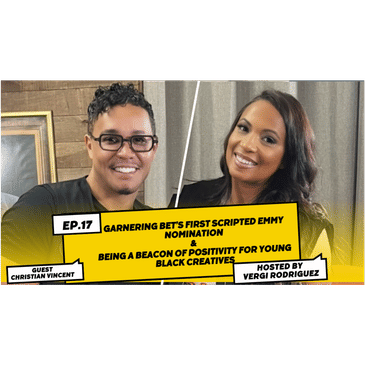
We sit down this week with Christian Vincent. Actor, Creative Director & Choreographer. Hallmark Christmas film," A Majestic Christmas.
Played the role of Ricky on the former LOGO Viacom television series "Noah's Arc." He has toured and performed with Madonna, Gloria Estefan, Prince, Ricky Martin and Britney Spears. Choreographed Netflix's biopic of Madame C.J Walker, starring Octavia Spencer entitled "Self Made," in which he was nominated for a World Choreography Award.
He also choreographed Lifetime's biopic on Salt-N-Pepa. He has also appeared as an actor in the ABC Family miniseries Fallen "Fringe," "Continuum," Smallville," Center Stage: Turn It Up.
A Race Of Your Own IG : / raceofyourown
Christian Vincent: https://www.instagram.com/christian.jd.vincent
Don't forget to subscribe. Thanks for watching.
Listen also on: Spotify: https://open.spotify.com/show/3YOHILg...
Amazon Music : https://music.amazon.com/podcasts/0d4...
RSS FEED: https://rss.com/podcasts/araceofyourown/
[00:00:00] Hi, so I'm Vergi Rodriguez and we're here with A Race Of Your Own where we talk about how inspiration leads to resilience. And today's guest is an Emmy-nominated choreographer. He's an actor and creative director. He's the governor, one of the governors over at the Television Academy. He was a lead actor in the Hallmark Christmas film called A Majestic Christmas. He played the role of Ricky on the former Logo Viacom television series Noah's Ark.
[00:00:25] He has toured and performed with numerous artists including Madonna, Gloria Estefan, Prince, Ricky Martin and Britney Spears. He also choreographed a Netflix biopic of Madam C.J. Walker starring Octavia Spencer entitled Self Made. And he's appeared as an actor on TV shows like ABC Family miniseries called Fallen, Fringe, Continuum, Smallville, Center Stage Turn It Up and The Power. Welcome Christian Vincent.
[00:00:56] Hey! Hi! Hey! Hi! How are you? I'm good. How are you? Good. Thanks for making some time Christian. Yeah, thanks for having me. I appreciate it. You are one busy individual. I try, yeah. And you try to be, right? I mean, sure, why not? You know, we've known each other for years.
[00:01:16] Um, and I think to say that you have had, um, one of those careers that's really transcended time, right? You've been able to go from being a dancer to being an actor to, you know, you've worked as a choreographer as well, but, um, you know, and, and have kind of maintained this balanced career.
[00:01:39] At least, you know, kind of that's what it looks like from the outside looking in. And you were also nominated, which I didn't put it on here for the first scripted nomination for BET for choreography, which was for a show called The Porter. Right? Um, where do we start? How do you keep it all together? Um, I think it's just, am I keeping it together? I don't know. Am I keeping it together? It doesn't feel like it, I'm sure, at times, but.
[00:02:08] I think it's just, uh, I think I am blessed to be able to work at what I like to do. Mm-hmm. So it's, and we relate on this, like we, you know, we both had a passion for the arts, dance, you know, dance is my first love. So it was that drive to become a dancer and work for, you know, the artists that, you know, we got the opportunity, you know, icons, you know, you want to work for the Madonnas, you want to work for the princes.
[00:02:38] And I got that opportunity to work with a lot of icons of our generation. And that was like that childhood dream, but then you have to continue to evolve. And I think the, the segues have been what have been, I guess, kind of natural in a way. Like, I think we think a lot, like, well, you go from dancer and you always hear as, what are you going to do after you dance? Like people think your career is going to be done when you're 25.
[00:03:08] Right. Which is a joke. Which, that's a whole nother, because it's just, it goes on. Yeah. Because I feel like just at 25, you know, you're just figuring out, you know, kind of like as a career, like that you've, you know, you've kind of made it so to speak. Right. At least for dancers. Right. Unless you're a kid, kid dancer, but like, really, like, it was really in our twenties that we were, you know, which was only yesterday.
[00:03:33] Yeah. Like, you know, a few years ago, you know, you're, you're feeling it out. I think, yeah, you get into it. And, but I, it's, it's funny about this industry or I think as dancers, especially when you're in the entertainment industry, I saw a lot of dancers, as soon as they became dancers and they got on set and they were behind an artist. It was like, they wanted to move into that next thing. So, um, you do have to look ahead. And I think in looking ahead, it was, okay, what is the next?
[00:04:00] What are some of my other desires in this arena? And it was, um, choreographing. So I started assisting choreographers, uh, Michael Rooney, uh, Mickey Rooney's son. Yeah. You know, um, I love Michael. I love Michael too. He was the first person that I assisted and I learned a lot working with him and that segued into my, you know, choreographic career.
[00:04:25] But I also wanted to act. And there came a point as a dancer where I think it felt like, hmm, it wasn't enough that, that childhood desire to dance behind artists. I think I had fulfilled that.
[00:04:46] And it was, I, I wanted to feel like I was, I wanted to use more myself and be, you know, if you think of yourself as an inch instrument, like I, I had other songs that I want to play. So, you know, I started venturing more into acting and, um, I was lucky enough to audition for this show called Noah's Ark, which was at the time logo, which is a Viacom network was looking for new content.
[00:05:16] And I had auditioned for Noah's Ark prior to it being on logo. And it was an experimental pilot, which eventually became a show on logo and logo was a gay and lesbian network. And Noah's Ark was the first black gay TV series.
[00:05:33] And so it was kind of like a pioneer show. And in a sense, and I give credit, not just because I'm in it, but I think to all the actors that took part in it, they're kind of pioneers and brave because it was at a time where, you know, being on a show like that was, you know, could have been considered by some as career suicide if you want to be an actor.
[00:05:55] But, you know, I, I think all of us, we wanted to, wanted to act, you know, and we were given, I was given, I'll speak for myself, given an opportunity. And that show led to me starting to audition for other shows and get other jobs, but I'm going to, yeah, it led to me getting other jobs.
[00:06:19] So it was, it was over the years, like getting other shows, even to the point where I was, and I'll say this, I'll be honest, I was, I was surprised that I became, you know, a lead in a Hallmark movie. And one of the, actually that year was the first time I think they had black leads. Oh, wow. Yeah. What year was that? 2018. Wow. Yeah. So I think I was one of the, the first black leads in a Hallmark movie. Wow.
[00:06:48] Do you feel like, you know, now, and even then maybe when you were doing Noah's Ark, you had like this responsibility to kind of portray yourself or portray the character, right? Because it was so important if it was like a black, first black, gay TV show, you know, portray the characters a certain way, like for you. Did you feel like that was a responsibility?
[00:07:11] I think you're, you know, if you're the first at doing something, especially when you are representing a, a minority, that there isn't a lot of representation, representation at all, positive, negative. Um, you do feel an obligation to do justice to the character.
[00:07:40] And some people may think you did. Some people may, you know, there's always gonna be different opinions. Some people will like it. Some people won't. It's this, it's not enough of this. We need more of this. It's at the end of the day, all you can do is what you can do. And, uh, an opportunity was presented and I wanted, you know, you just want to be as authentic as possible. And I think at that point it's, it was like, I was still a fledgling in a way in the industry, especially in that part of the industry.
[00:08:08] So what I, I feel proud in the fact that there were people at that time that would, and still that would come up to me and say, you know, you were the first, you know, show that I could relate to, or I saw myself in. And, and that, you know, a lot of people tell me how they used to hide the DVDs under their bed because they didn't want their, their, their mama or their daddy to find it. But it was the first time that some people saw themselves.
[00:08:34] And I think for all of us, um, it doesn't matter what race you are. I think when you can see yourself in the media in a light that you feel is positive or in a light that you can relate with, it's affirming. So I think for that reason, I feel proud of that.
[00:08:58] And I'm also, uh, I think proud in the fact that at that time I didn't, I just did it. Yeah. Whereas a lot of people wouldn't have. And they might have second guessed it. Well, they would know they wouldn't do it. I remember there were people that would not do it. And there were people that would that to this day, some people could think it was a mistake. You know, could think it's a mistake. But for my trajectory and for my life, it was the right thing for me to do. And I'm glad I did.
[00:09:26] And we, after all these years, I can say that, you know, it's out there that there is a reboot of it. Nice. Um, that should be coming out soon. Nice. And hopefully it is fulfilling to, you know, the fans that liked it. Maybe there'll be some new fans. And, you know, for those who don't, then. You heard it here first. You heard it here first. I don't know if it's first, but it's out there.
[00:09:52] And I, you know, I've seen when you've posted about the show and you've, you put some of the comments of what people say that were real fans of the show and followed you on the show and the other actors that they were there. You really touch people's lives in that sense. Like, you know, you, you portrayed me, you know, positively is, is, is kind of how people kind of have taken it. And I, you know, that's always great to hear and see that there's, um, somebody that's, that has had this like positive impact. Right.
[00:10:21] Um, on a community that sometimes is, is, um, marginalized and, you know, talked down about. Right. Uh, always. Um, and so that's always great to kind of see and feel now kind of moving forward with someone who has been a huge advocate for the LGBTQ community, which is Madonna. Right. And you went on tour with her. Um, you also were in the, um, tell me music video as well. What was it like, you know, kind of being with someone?
[00:10:49] Is there someone, is there something that you felt like in working with her, you kind of took away from that, that you were like, yeah, uh, you know, I learned this kind of thing about that because that's such a huge artist, you know? And I've had Kevin stay on the show, which, you know, he was with her kind of the, the kind of decade. We love Kevin. Um, hi, Kevin stay. Um, but you know, we, you know, he was with her, you know, kind of the generation before you.
[00:11:16] That was a generation I was inspired by because I remember being in, in Canada, in high school, like watching the blind ambition tour and knowing the dancers, you know, knowing, seeing Kevin, knowing them by name. And, you know, it was, that was like that manifestation, that dream was like, oh, I want to one day dance for her because of her, her artistry, her creativity.
[00:11:39] Um, so when you say getting that job was, um, it was fulfilling that childhood dream. I remember actually, I remember being in my car after getting it and I got in my car and I called my parents and I was like, I got it. You know what I mean? You start crying. You broke. And it was like, I think now I remember, I got it. You know? But it was, it was like, I was determined.
[00:12:08] And, uh, thanks to, uh, choreographed for creative director, Jamie King. Jamie King. We love Jamie. We always talk about Jamie and we love Jamie. Hi, Jamie. If, you know, I think he has a, he has a really good eye for talent. And he does. Getting it was amazing. The experience, it was, it was doing the music video, being one of four guys that were chosen for the music video. We filmed Don't Tell Me. You're getting, you know, at the time I'm a 20 nothing and you're getting dressed in, you know, by, um, D Squared and. We love D Squared.
[00:12:38] Yeah, D Squared, you know, and then do the video and with her and then we did the promo tour. And that was the first time I had gone to, went to, it was, uh, Rome. Rome. Nice. I forget. You get to go to these fabulous places. Yeah. No, it was, it was a, when I, you forget, like, I think when you're, sometimes when you're really a baby, you, you take for granted a lot of, and I, when I go back and I think, oh, yeah. Yeah.
[00:13:06] I went to Rome and Milan and all that dance for Madonna and we did the different, like, um, Italian TV shows. And it was, it was an amazing experience. Then going to do the Grammys. And then finally we had to re-audition to be on the world tour. And I was her dance captain for the Drowned World Tour. And what did I learn from that? Um, I learned, uh, overall, what do I think? She's a smart woman. She was a, you know, she's a smart woman.
[00:13:32] She, she could, she knew if somebody's, you know, Jamie, someone's costume, the button or, you know. Is off. There was, she would know like the minutest, minute details about things that were going on on stage. So perfectionist, smart woman. And that's like business acumen at that point, right? Like it's her show. It's her name. It's her face. It's her music. You know, at that point, it's kind of like just to me, it's kind of outside looking in.
[00:14:00] It's like, you're a business woman at that point because you know what's off. Something is off and she could pick up on it. Right. But she's obvious, I mean, to do what she's doing and for as long as she's been doing, it's, it takes tenacity and I'd say intelligence. So smarts. Yeah. Yeah. I was just, uh, I just admired the intelligence, I think in, in that scenario.
[00:14:28] Um, yeah. Yeah. Um, and we met when, uh, you know, first jobs. Yeah. Working for Prince. Yeah. You know, in Minnesota. Minnesota. Minnesota. At Chanhassen. Chanhassen, Minnesota. Don't you know? Um, you know, and, and working out of Paisley. You were there with me at Paisley in those rehearsal studios. Miss Melody Cool. Miss Melody Cool. Yeah. Shaka Delica. No. We had to name, so did you, we had to name ourselves after, you know, for your listeners. Per his approval. After one of his songs.
[00:14:58] So you chose. Melody Cool. Well, they chose. You, I chose my own. Who chose Melody? Well, what, like, I think we had input. I chose, I said what I wanted. But final approval. Oh, maybe yeah, it was. Yeah. Final. Yeah. Sure. I could have been like, call me seven. I was Thunder. Thunder. Throwing around all this. Hair. All this. It was some mess. Penny. She was giving. It was a mess. She was giving her. Yes.
[00:15:31] Some of our kind of behind the scenes pictures and footage of us, you know, living. I had never been to Minnesota. I had never, I had never thought in a million years I would have worked with Prince and that I would be working out at Paisley. I did. I never, I never thought. I never thought. I never. Don't you think, like, I think I truly believe in, that was the reason, like, when I would be home as a kid and all the award shows would come on in the days of music videos, it was like, I want to, I want to work with her. I want to work with him. Yeah.
[00:16:01] So. See, that was Michael Jackson for me or Janet. Yeah. You know, Janet and Michael were the ones. Prince, I just was like, I don't know if I'd ever get hired. You know what I mean? I just, I don't know. I never thought that. And to think and then to be there. And then I remember seeing him walk, walking down the hallway and just being too scared to like look at him in the face because I thought they were going to like fire me. So I, so I just remember just like always seeing his shoes with the little, with the little symbol. He was done.
[00:16:31] With his little, he was done. He was the hair, everything with the outfits. It was one of the most prettiest people I have seen on this planet, you know, and just his aura. Right. So like being back then, like thinking back now and just being like, wow, what a legend. And we got to, and I think, you know, after his death or during, you know, right after his death. And then, you know, you take stock of like, oh, I was there.
[00:16:58] Oh, I actually, he took us into the recording studio to record Raspberry Beret. Yeah. We were in his recording studio. His presence. And we had the opportunity to experience, you know, one of another icon. One of the greatest musicians. Yeah. We performed on his stage behind him. I remember, I remember that moment. And I will for the rest of my, like. Weren't we partners? Yes. Yes. We were a partner. And I, okay. True story.
[00:17:28] You knocked me upside the head. True story. This was, this was, I was nervous. I was dancing behind prints. What did I know? And I, Christian and I were dance partners and I didn't tuck in my arm. I was spinning. He was spinning me or something. I didn't tuck in my arm quick enough. And I clocked him on his brow and we're on stage and he starts bleeding. Literally, I clocked. And I was like, oh my God, I thought it was his makeup at first. And I was like, great makeup. And then I, and then I was like, oh my God, you're bleeding.
[00:17:57] And you, you just, I remember you being like, just keep going. Just keep going. And I was like, but you're bleeding. And like all the other dancers were like, you look great. Like, you know, and not realizing what was going on. I, and to this day, I'm like, I'll never live that down ever, you know? Um, but, um, you have, you have a scar now. I do. But, you know, it was done in love. It gives me more character. It does give you more character and nobody can see it.
[00:18:23] But, um, you know, I think that that was just like a moment that we all grew as artists too. Right. Because it was at that point for me that I was like, I made it. It's funny. I, I don't know if I ever thought, I remember being on that tour. I'm being, it's like one of my first shows. Yeah. I'm dancing for Prince. And we're in, you know, we did the tour and then the tour ended and I got back to LA. And then you think, I just danced for Prince and you're going to get all the, and you realize, Oh, nope. I have to go back to audition.
[00:18:52] I have to go and audition and figure, figure it out. And which reminds me of like, that was when I first jobs, which when I got back to LA, that's when I had to figure out, you had to figure out, okay, what is this that I'm selling? Like, what is it? Cause you're, you're basically like a product. You are a product. So that's when I realized, Oh, these are the guys who are working. Like I'd look like at a Kevin stay or at that time. I was like, Oh, I guess I need to cut this hair off so I can book a gig. The Prince hair. Yeah. You cut the Prince hair off.
[00:19:23] But it was many years of those kinds of experiences that, you know, you feel very fortunate. And I, it would be remiss of me to say, not to say, because I think it's really important. You mentioned that. I mean, I'm an choreographer actor, but I'm also an educator. And I think it has been, you know, if there are ever any young kids that hear me speak, it's like, I think my education has been the thing that has saved my butt many times because I could always, I've always, always taught.
[00:19:53] I mean, I've taught on dance conventions for years. I've taught masterclasses for years. I was a professor at USC and I went back and got my master's so I could be a professor. Um, and, uh, so I just, I like to just put that in there because that aspect, and I will say this and I say this to kids all the time. I think it was because of my education. That's why I got my Emmy nomination because if it hadn't been for that and the things that
[00:20:22] I knew and gained from, uh, going to school, going, getting my, getting my, um, masters and information I knew about historically about dance, which I knew when I would go into certain interviews, uh, that I could spout off to get a job. Yeah. Especially when you're doing pieces and work that are historically based like a Madam CJ Walker or a show like the Porter, um, there, you have to know the context of the era and what
[00:20:51] was going on historically and the movements that were, and it's not just, if you can look at, you can look up the Charleston online and you'll see what was a version, but it will not have been the version that black folks were doing in the early 1920s. Right. Like the original forms. And so I just put that out there that, um, education has really, truly, I think been a blessing from, for me. Yeah.
[00:21:20] Having something to fall back on. Well, it's not even fall back. Yeah. If you fall back, it's been my, it's been my foundation. Yeah. Yeah. I think education is, is important. And I think same thing. I went back to school when I stopped touring and dancing and as, as much as I had fulfilled that part of my life or my career, being able to have a degree to me meant something. I saw single parent home. I grew up, my mom seeing her go to school and how important that was. Right.
[00:21:45] Um, do you feel like from everything that you've learned, like now, like, is there, is there another shift? Like, is there something that you haven't done that you're like, Ooh, I would like to kind of maybe explore that just whether that's from a creative standpoint, because you come like your mom is very creative in that sense. And you know, how important was that for you? Kind of, kind of, um, in, in, in deciding like, Oh, I want to be a dancer or I want to move into acting or did she, was she just always like super supportive?
[00:22:13] I don't think she, my mother always introduced me. I, I say, I put it this way. She always has introduced me to beauty and creativity and things that were intelligent. Like she would take us to go see musicals and she put me in tap dancing because she liked the way, you know, she loved to watch Gregory Hines. So she, it's these things that you introduce your children to, um, you know, your child will
[00:22:42] find some, an affinity to some. So my mother is, I would say, if not my biggest inspiration, she's like my biggest inspiration. And I think, um, by her, her introducing me to things that were positive and beautiful and that it made me look at those things and, and I latched onto them.
[00:23:07] And, uh, if it weren't for her, I don't think I would have been in this career. Not that she, true transparency. I don't think she necessarily wanted me to be in this industry initially as a dancer. And I've said this numerous times, my parents always, you know, supported me if I, but this is, this was a scary industry for them to see their son go into because, you know, my dad was a pharmacist, my mom was a nurse and a hairdresser, you know, also another, she was
[00:23:36] creative in that respect. So I think they knew, you know, being a person of color, it's like, get your education so you can get a job that can be lasting and sustainable. Like go to medical school, go to, you know, and had I not fallen in love and dance with dance, that might've been the route that I had taken. But dance took me down this path and, um, I've continued to go with it.
[00:24:05] And as far as things that I would like to do saying in the future, there's a lot that I would like to do. I think when you say made it, I've had a full career. I always like to feel like, okay, I'm blessed and not discount what I've done, but there's still a lot more that I want to do.
[00:24:28] But I think it's really for me to figure out how to do it as opposed to waiting for someone to say, for someone to be like, pick me, like me. Like that's the only, right. Having the impetus. I'm like, I'm like over that part. Doing it, doing it yourself versus, you know, independently. Versus like I have to, you know, look the right way, I have to sound the right way or, you know, there's just being yourself, just being yourself, which I've always known some
[00:24:55] people will like you for that and some people won't. No, no. And I will focus on- And that's okay. And that's okay. I don't know where I'm looking at. And that's okay. But that's okay. And do you feel, because you, you know, growing up in Canada, Canada. In Canada. In Canada. You know, and not growing up in a big city, right? In that sense. No. Right. Did that, you think, influence your mom's kind of take or your parents' take on the
[00:25:24] industry and what, was it that like versus- No. No? I don't think no. Just what they- No, because my mother, my mother, when she was young, she, she's from Hamtrap, Michigan. So she went and she sang at Motown for a moment. Oh, nice. And she knew a little bit- Did she put out a record? No, she was, they had her, I don't know. I'm probably going to say the right thing, but I think she was doing like a demo or demos. Okay.
[00:25:51] But I'm not going to say who told her this, but someone, I'm not going to, but they said she wasn't hungry enough. And she said, I wasn't. She said, I was not hungry enough. I don't think she wanted to do all the things that needed to be done at that time to get certain jobs. And as we see the industry and the state that it's in now. But I don't know, but I think she, like we used to, we used to sit up and watch award shows.
[00:26:18] I think that's what made me love, like we watched award shows and I think that's where I got my love for all of this. So I don't think, I don't think, uh, because I was from a small town that they, no, I don't think that had anything to do with it. She just, it's just- And we were right across the border from Detroit. So there was a little bit more there. I mean- Do you feel like that influenced you too? Like being able to just kind of cross the border, cross the border in that sense. And like you're in the States now and like you- Cause you still teach there, right?
[00:26:47] I still go back there and I, I, I teach. Um, and I'm sure that that influenced you too, knowing your mom was- I love Detroit. Yeah. I love that. I have a special- Detroit is almost like home. Home, yeah. Although I was born in Windsor and Windsor is home. Um, there's a special connection there. It's kind of where I grew up. It was, being in Canada, but on a border city, it was different than living, um, let's say
[00:27:14] in further into Canada or not in a border city. Let's just put it that way. Because most of our television back then was all American. Right. So- And you're right across the border. And we were heavily influenced by American TV. We had American commercials. So it was kind of like living in the United States, but not. So it does definitely, the media shapes the way, how the way we think. So definitely having access to U.S. television and not solely Canadian television during my
[00:27:44] formative years had a big impact on, you know. Did you get to train in Detroit too? Yeah. And I went, I started- And you still teach there? And I still go in and teach there, but I trained in Windsor. And as I got older, I went and we crossed the border. My parents would drive me like two hours sometimes to get to Lascaux School of Ballet. And we would do, I'd do the Nutcracker at the Fox Theater every year. Oh, nice. If you're from Detroit, you remember the Nutcracker that was at the Fox with the Detroit Symphony Orchestra. Well, Fox Theater is pretty, pretty well known. Yeah.
[00:28:12] So that was, um, big part of, you know, every time I cross that border and you go downtown Detroit, it's like all these memories flood to me about driving over there during the holiday and like not just during the holidays, but holidays to do Nutcracker. A lot of my family is still there. Yeah. Um, my mother's side. So. Yeah. It's good to see that the city's having a rejuvenation in that sense. It's being revived in that sense. So it's great to see, um, you know, and there's something I always kind of touch upon
[00:28:41] on every episode, which is, you know, what's it like when it comes to, or actually feedback you'd have for any upcoming, you know, performer or somebody that's just a creative, right? I don't want to just stick to performers that says, you know, what would you say in wanting to stay in a race of their own? There are moments we go up the hill, down the hill, we plateau, we have those tumbleweed moments, right? What would be a piece of advice you would give them in saying, you know, when you find yourself in those moments, this is what I did. This is kind of what worked for me.
[00:29:10] I, there's so much I could say about, um, if you're looking to have longevity in this, you know, this, we're talking about entertainment. Um, I think I can only speak from my experience. And I said this already, my foundation was that, um, you just try and make sure that you have as many skills as possible for the area that you want to go into, whatever that means to you.
[00:29:39] For me, it was my, my education. Um, I think you have to have a strong love and like for yourself because I think that can be tested in this industry because I think a lot of creatives or artists can doubt themselves and maybe based on other people's opinions of you, maybe not like themselves as much.
[00:30:04] So I think however you can find pull strength, whether it be from family, from your spirituality to keep your head on straight and do what you love. And if you, you just kind of have to keep going. And I think there is, I think there is for everyone, you have to, I'm not going to say reinvent yourself, but you, it's going to wind.
[00:30:32] You're not going to always be as successful doing the exactly exact same thing. So for me, I started as a dancer. I knew I was not going to be a dancer until I was 80 years old. So I, I am going to have to switch and figure out, well, I like doing this too in conjunction with dance. And with, especially like if we're talking specifically about dancers, it's like there are so many different avenues in dance that you can be in.
[00:31:00] And, um, until you're 80, cause I had, I worked with choreographers that were 80 some years old in wheelchairs. Yeah. And this one choreographer said to me, um, uh, he's no longer here, but his name was Donald McHale, he said, I tell people that there is a place for everyone in dance, you know, basically you just have to find it. So in the entertainment industry or your, whatever it is that you love to do, it's like there is a place for you. You just have to find it.
[00:31:29] I think be creative and be smart and keep this healthy. Yes. Mental health is important. And there was one point I didn't even touch on one of your credits, which is you also choreographed Lifetime's biopic on Salt and Pepper. Yeah. Um, uh, you know, and what was it like? Did you get to work directly with Salt and Pepper? They were, so I, I got to work on, um, I was hired to choreograph the Salt and Pepper biopic.
[00:31:58] And like I was saying earlier, I've had the opportunity to work on, I think what things that are historically significant to American culture and black culture, like Madam CJ Walker, Salt and Pepper, the Porter. So Salt and Pepper, they were there on set. Um, they were overseeing what was going on. I love them. Mayor Van Peoples was a director. Oh, nice. So he was like another, like as an icon. Oh my God. Why didn't I realize that? Yeah.
[00:32:27] He was, he was a director. Oh, that's great. Um, so it was like, you know, that kid in you comes up when you see something, you're like, Oh, yeah. Cause he's inspirational. He was like one of the, I remember growing up, one of the first people I watched and he would direct, I mean, who's acting, but he was directing and creating projects. So to create an avenue for you and then you're choreographing with him. And then choreographing for him. So it was, uh, it was great. Um, I loved the actors, the leads. They were still friends with him to this day.
[00:32:57] It was a lot of work, but great. I, all I can say is overall appreciate the work. Yeah. Yeah. Well, thank you, Christian, for being here. Noah's Ark hopefully we'll stay tuned and see it coming up soon. Uh, hopefully in 2025. And, um, you know, I just appreciate our friendship. We've known each other forever and for a long time. And thank you for like all of your feedback. Um, you know, if there's anything I can say, I mean, if there's resilience is like you to
[00:33:27] me, you're like one of the people in my life that I can see over and over again, just always like no matter what happens, just keeps kind of pushing through. So I appreciate that. Um, so yes, of course. So again, I'm Virgie Rodriguez for a race of your own. Please subscribe, leave us your comments. Ask some questions, follow us, let us know how you feel and stay tuned for more. Peace.